
So today was our walk from Santa Maria La Real de Nieva and we were in two minds about how far we were going to walk. Pat’s getting a little bit tired, so we thought maybe we’ll just walk to Nava, which is about 15 k’s for us because we stayed just prior to Santa Maria. So, it wouldn’t be a bad day. But the profile’s good, it’s flat. And then we thought if we’re going okay, we’ll continue on to Coca, which is another 10 k’s.
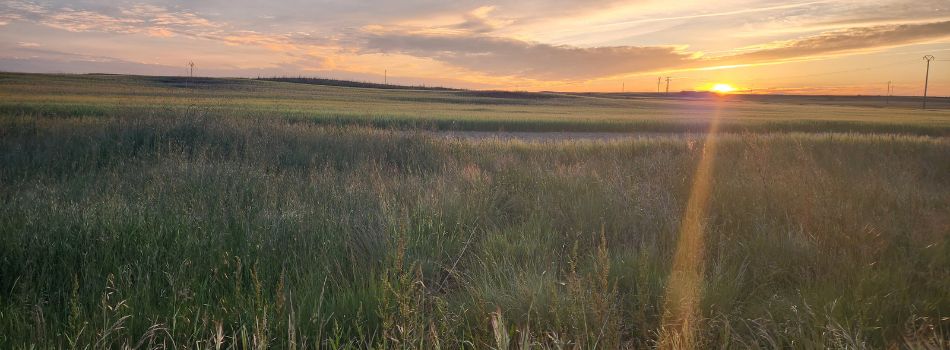
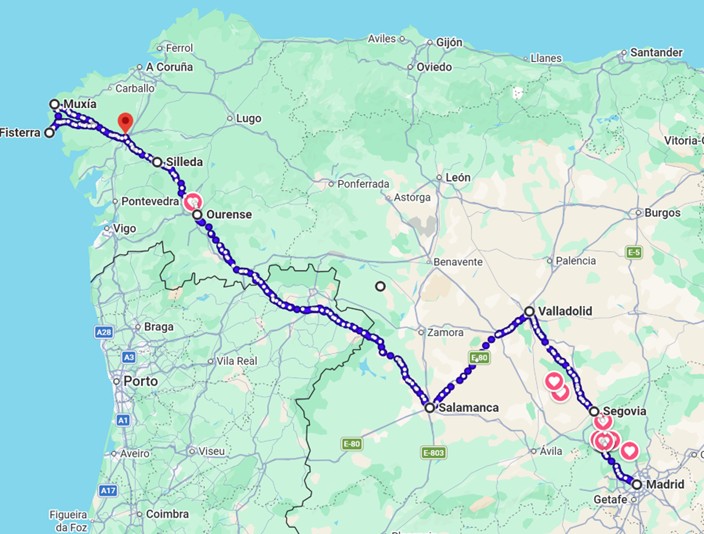
The only concern is that Nava has a four-bed albergue and today we realise there are 10 people on this stage. We met another four today. So we now have six, including us, so that’s really busy. We didn’t really expect that many people on the Camino Madrid. And when you’ve got a couple of places with four-bed albergues, that can be a little bit of a challenge. And this is also, sadly, going to be our last day of walking on this Camino, because we only ever planned to walk for about seven days on this one, just to give Pat a little bit of experience of what it’s like on a more remote Camino. Then we’re heading off to Salamanca and we’re gonna then walk the Sanabres into Santiago then we’re going to walk from Muxia back to Santiago.
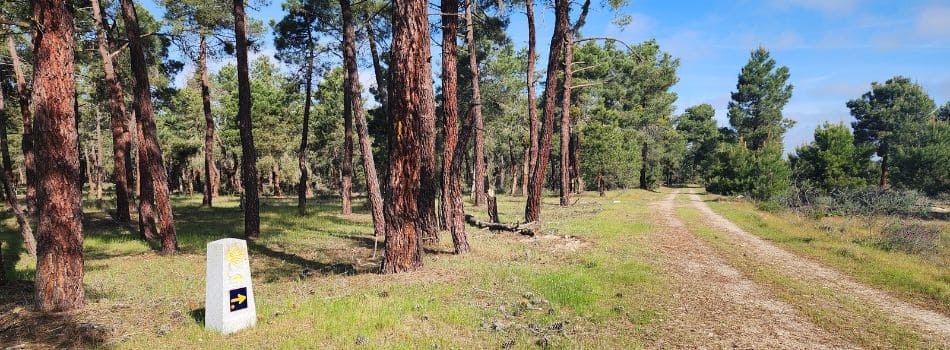
So that sort of second and third component of our Camino proper because they’re ending in Santiago. The Camino Madrid for us was really just a bit of a warm up and to see what it was like on a more remote route. So anyway, we decided that we would – in the end, try and make it to Coca, which for us is sort of an extreme, not extreme, but for us it’s kind of at our upper limit. It was 25 k’s and it’s certainly the longest that Pat has walked in a single day, but it was flat, it was good walking and it all went really well.
So, we decided then, rather than stay in Coca just to travel onwards somewhere the next day, that we would actually go to Valladolid. So we’ve got somewhere booked in Salamanca, but we had a spare night up our sleeves, so we thought, let’s go to Valladolid. Somebody on the Camino Forum, I think it was Janet, had suggested that a way to get from Coca to Valladolid was to get a taxi to Olmedo and then the bus, the ALSA bus from there to Valladolid, which is what we did, and it worked out great.
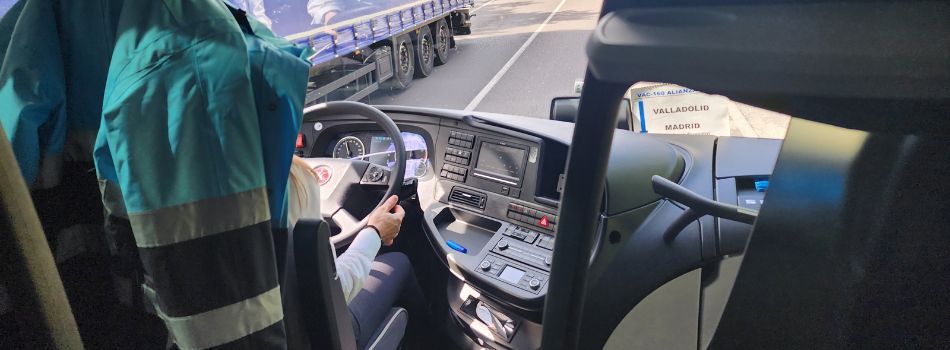
So, we walked into a local bar in Coca, bought some drinks and a snack, and then asked, you know, “Is it possible to get a taxi from here?” And they said “Yes”, and lots of back and forth in broken Spanish, and using Google Translate, they said, “Oh look, we’ll call the taxi for you.” Now this was at about three o’clock, and kind of as expected in these small towns. They said, “Yes, there’s a taxi, but it can’t come until five.” So, we said, “That’s fine. We’ll sit and eat and drink for the next couple of hours.”
The taxi was actually available at about 4:30. He rang the bar owner and said, “You know, I’m available early and can come and pick them up.” And it was about a 15- to 20-minute drive to Olmedo. And we had about a 20-minute wait for the bus. The bus ticket we had bought online, that’s a great system using the ALSA app and the bus dropped us into Valladolid and we walked up to our hotel. We stayed at the Hotel Mozart, which was very comfortable and quite central.
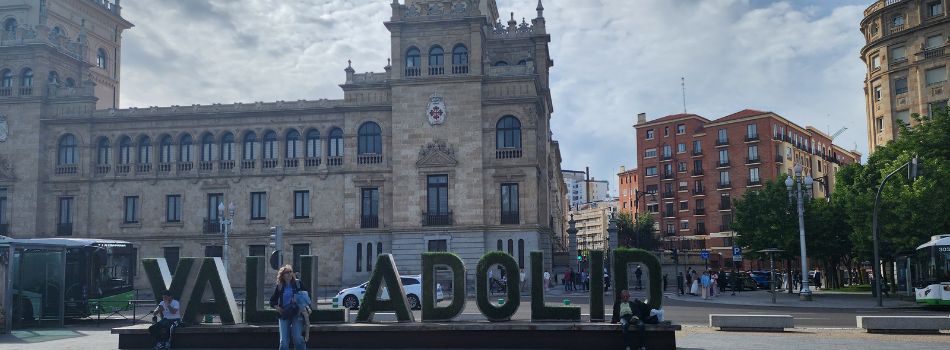
So that was the end of our little venture on the Camino de Madrid.
Impressions are that it’s a wonderful camino, the scenery is fantastic, it’s not for the faint-hearted. The climb from Cercedilla over the mountains into Segovia is, you know, it’s quite tough. And some of the logistics with places to stay with small albergues and things like that, you know, can be a little bit of a challenge, but a wonderful Camino so far.
And we’re looking forward to the next section now, which will be the last hundred on the Sanabres into Ourense, back into Santiago and then out to Muxia and walking back to Santiago. So, it’s been a great experience.
That has been a most lovely walk for both of you on the Madrileña !!
The Madrid Way north of Valladolid anyway is a somewhat artificial creation, or rather a tertiary subsidiary route of the Francès has been made the main Madrid Way on that stretch — but the historic Valladolid > Medina de Rioseco > Mayorga route has been heavily be-tarmacked, as well as both routes from there to León whether via Santas Martas > Mansilla de las Mulas or via Valencia de Don Juan > Onzonilla ; but there is a complex network of old primary, secondary, and tertiary routes between Madrid and the Francès, reaching it at various points between Sahagún and Astorga, plus possibilities to avoid the Francès completely via Zamora, so that whole area of the Meseta is a DIY choose-your-own-path paradise ; and a modern very detailed mapping app like mapy should make shadowing the old primary route from Madrid to León on parallel farmers’ tracks doable these days with little tarmac involved.
Sounds interesting!